Saturday, 7 March 2015

Virtual methods in palaeontology

So this post is a much delayed one (I'd like to blame work, but it's been more slacking on my behalf). I taught a couple of geology MSc students a few weeks back about some of the virtual/digital methods used in palaeontology, which focussed on the ones I have some experience with. Inevitably this means I will have missed some and for that I will have to return in later blogs! Any program names used here are only because I have experience, and is not to say they are the only, let alone best for the methods. I would encourage people to try out as many as they can to find out what is best for them and for pretty much every product that involves a license, there are free equivalents.

Laser Scanning/Photogrammetry

Laser scanning - As the name suggests the laser scanner uses a laser to scan the surface of an object. It works by shining a laser that reflects off of the surface and is picked up by a receiver. In the case of most palaeotological applications the scanners are based on triangulation - the receiver has a central location where reflected light hits for a known distance. Deviations from this location are caused by the object being scanned being closer or further away. For each scan a point is produced that get coalesced into a cloud that define the object. Some modern scanners also incorporate cameras that take photos of the object being scanned and overlay the photographs onto the cloud to create the entire surface/texture. Scanners are used particularly for objects where they cannot be CT scanned due to size, and only the external shape is required (as the scanner captures no internal structure) and where high detail (on the micron scale) is required. However, laser scanning can be quite time consuming and as it is based on line of site, often struggles around many complex structures e.g. the struts in skulls, which result in gaps in the model emerging unless additional scans are carried out for these areas.

Laser scanning a sauropod vertebra
http://www.theverge.com/2012/7/2/3105916/3d-printing-dinosaur-fossils-drexel-lacovara
Photogrammetry - Much like laser scanning, this method works by creating a surface of the object. However, unlike laser scanning, requires no exceptional equipment and is based only on photographs. Indeed these photographs don't even have to be digital for this method to work. A series of photographs is taken of the object, roughly equally spaced (in terms of degrees if imaging the entirety of an object) all the way around the object. This is then repeated at different angles (normally higher or lower angled than the first photo series) as many times as wanted. These photographs are put into a computer program which identifies perspective and relative landmarks (sometimes automatically, sometimes requiring user input depending on the program) and using this creates a point cloud as in laser scanning. This point cloud can have the textures of the photos overlain to create the object digitally. A good example is the Stegosaurus specimen at the NHM in London which was reconstructed digitally for some of the research using photogrammetry. A major proponent of this method is Peter Falkingham (with whom I had the privilege to share an office for almost a year) as it allows for quick and easy reconstructions of trackways and give detail far beyond what traditional ichnotaxonomists do with standard line drawings. I would recommend anyone wanting to know more about the method to read his 2012 paper about it which also provides access to some of the free software. You can even try out 123D Catch (one of the programs I have used on my computer) on your iPhone! As with laser scanning there is problems with line of site, but this can be rectified by just taking some more photos from different angles. The number of photos taken, the regularity and evenness of spacing, and the number of separate planes/angles will improve quality of the final reconstruction. I've had models work with 20-50 photos, whilst others have failed at over 100. It depends on the complexity of the structure and what you are trying to do. Experimentation is free though and is reliant only on computer power! This method has become one of the preferred ways for digitising specimens in museum due to its low cost.

Photogrammetry of an Asian elephant from Falkingham, 2012.
http://palaeo-electronica.org/content/issue1-2012technical-articles/97-264/118-264-figures#f6

Scanning and image segmentation

Scanning - Fossil scanning has been used for a long time originally as just x-ray imaging, but increasingly CT and synchotron scanning. CT and synchotron scanning involves usually radial scanning of a specimen producing (post-processing) a series of 3D x-ray scans. The biggest difference between the two methods is the energy and size of the machines. CT scanners vary from desktop size to large walk in units, but even the biggest do not compare to synchotrons. Synchotrons are particle accelerators, that specifically spin electrons around a ring at near light speed. In doing so the electrons give off x-rays, which are focussed down beam lines. Specific beam lines are set up for studying fossils (and to my knowledge 3 synchotrons in Europe currently are used study fossils - Swiss Light Source, European Synchotron Radiation Facility and Diamond Light Source).

Swiss Light Source synchotron - the giant ring at the front, but all the other buildings are associated
The choice of method is determined by size of the specimen (synchotrons don't work well with specimens beyond a few cm, unless you take many scans and merge them all together), the resolution required (a medical CT scanner will provide a lower scan quality than a microCT, which in turn is lower resolution than a synchotron), the cost and availability (synchotron time is often free and funded by research but is highly competitive, whilst access to CT scanners can run into the £100s/hr but is often easier to get time on). Beyond this there are other factors that need to be considered including length of time required to make sure good CTs are taken with no artefacts or beam hardening effects (often associated with a lack of x-rays penetrating the specimen due to the x-rays having too low energy or not enough time to allow sufficient numbers to get through). When it comes to fossils there is often a bit of trial and error involved in this process and linked to what is seen post processing and during segmentation

Piece of pliosaur jaw in Southampton CT scanner. Went on to be published in Foffa et al. 2014 (x2) with which I was involved.
Segmentation - After the resulting CT scans a process called segmentation is carried out. This is where the object of interest is isolated from the CT scans. I've endured both Avizo and Mimics with various degrees of swearing and relearning techniques as I flip between the two. They both have advantages and disadvantages depending on what you are trying to do, but I won't discuss further here (feel free to get in touch/leave a comment). The complexity of this varies from simple and often can be carried out in an automated way for single bones, to a highly intensive process that often involves many hours of someone (I have been this person many times) manually isolating the required item from the scan, be it a bone, endocast or internal anatomy.
CT scan demonstrating the god awfulness of fossils in matrix. Blue is toothy bits (mostly), although there is lots of noise in the image, whilst the red area is my deselecting pixels.

The complexity of the process is often determined by the preparation of the fossil (more matrix makes segmentation more tricky), the x-ray density of the fossil compared to the matrix (e.g. where bone is more x-ray opaque than the matrix there is clearer delineation between the two), the type of matrix (iron or pyrite rich matrix, for example, tends to make it tricky for good CTs to be made), how well scanned the item was/number of artefacts.

Using these digital preparations is becoming more common to guide the actual preparation of fossils in large museums where CT scanner access is now easy. Another thing the virtual reconstructions allow is retrodeformation (basically the undoing of damage suffered whilst the specimen is fossilised). Stephan Lautenschlager has been incredibly good at it, and I have a paper in review at the minute discussing my experience so stay tuned!

The resulting reconstructions can then be used for publication, or exported in various formats (commonly .stl or .ply) to create 3D pdfs, create 3D printouts or use in functional analyses. There are some good .stl repositories for fossils e.g. Phenome10k.org that allow of exchange and sharing of models.

Printing/3D PDFs

3D printing - 3D printing has been on the rise with the printer costs becoming far cheaper. These printers work by melting a layer of plastic or resin (SLA and ABS are the most common) and extruding this onto the print surface (not dissimilarly to standard printing). What varies however is the fact that these layers of plastic are then built up on top of each other layer by layer until the final structure is built. Nowadays a decent 3D printer with a 20x10x10 print area costs around £1000, with the cost falling year on year, and the print material is about £50 for a roll of about 1kg. However, with this decrease in cost, has come an increase in print size areas, speed, accuracy, and nowadays you can print in multiple materials at the same time (e.g. a dissolving print material to create supports that when the printout is immersed in water dissolves, leaving only the wanted 3D structure, or even some rigid and some flexible components). With 3D printing special consideration has to be given into the design of the structure as often supports need to be added (most printer programs do this automatically) to ensure that overhanging bits are printed correctly. These can be easily broken off at the end but can affect the surface quality where they attached. This is all well and good, but I hear you asking what's the point beside creating lots of pretty printouts? Well the printouts are awesome, but there are both research and outreach components to it. In terms of research, 3D printing allows for a quick and easy way of enlarging otherwise microscopic fossils into a size that can be handled and manipulated easily. In addition you can quickly send files to collaborators in other parts of the world and they can print out their own copy of the specimen in question rather than risking damaging or destroying it in transport (particularly if it is fragile). They may also be useful for recreating original specimens if it is lost, but scans exist  and when no other method (traditional casting and moulding) will work. In terms of outreach, they are incredibly useful to take these replicas to show people what you work on in terms of fossils or research that again otherwise runs the risk of being damaged whilst on show.

Let's be honest this is cool, and you kind of want one.
http://www.earthmagazine.org/article/changing-landscape-geoscientists-embrace-3-d-printing

3D pdfs - This is much like 3D printouts, except in its digital format that opens with most Adobe Readers. 3D pdfs allow for users to gain access to reconstructions, and in the highest quality ones can allow users to interact by removing components (often things like soft tissues from around skulls). Again these have the ability to be rapidly sent to collaborators worldwide, but they also allow for more detailed figures within publications to allow for better understanding of features that are being described. If you are unsure of what I mean, please do go check out the Witmer Lab's work as they are one of the main users for both scientific and outreach purposes.

Functional analyses

Beam theory - This method works on the principle of bending beams. If you assume a beam is held at one end (a cantilever beam) and a force is applied to the other it will produce tension on one side and compression on the other. Due to this, there must be a region somewhere that undergoes neither compression or tension, the neutral axis. How the material is distributed away from this determines how resistant to bending an object will be:

Shamelessly taken from my own paper on spinosaurs:  (A) When a load is applied to a beam with one fixed end (a cantilever beam), the effect of the beam is a deflection in the direction of the force. This results in the most extreme tension on one side of the beam, and the most extreme tension on the opposite side. In the middle, there is a point where there is no tension or compression, called the neutral axis. B) Two circular cross sections of equal cortical area (black). Beam theory states the solid tube (hollow circle) will have higher resistance to bending and torsion than the solid circle due to the material being distributed further from any neutral axis. DOI10.1371/journal.pone.0065295.g004
For this method to work best cross sections are needed, and these are best acquired from CT scans, although other methods work. There are many papers out there on the method (it was my first paper), but this method is falling out of favour with more complex models like FEA. It does however maintain use as a predictor of relative resistance to bending and torsion of objects and allows for gross comparisons across taxa.

FEA - See the earlier blog post I did for lots of details.

Musculoskeletal modelling - This method is one that is increasingly popular for understanding the influences on muscles and bones, and how they interact in posture and locomotion. I am still a newbie at this and am learning the method now. However, it is already extensively used within palaeontology to answer questions such as how fast could T. rex run? Effectively the structure in study (let's work with limbs here because that's easiest), is modelled. The limb then has muscles attached as informed by either muscle scarring locations or by using extant phylogenetic bracketing (finding the closest relatives and using them to help inform us of extinct life). The model can then be tweaked with muscle parameters - mass/force production/relative contribution of tendons etc etc. (again inferred from modern relatives), and then the computer can work out ideal postures, how fast the limb (and animal) can move, how big muscles need to be to move at certain speeds, what order muscles are likely to activate in to allow biologically reasonable movements.

T. rex model with all of the muscles attached to the limb and pelvis, from Hutchinson et al., 2005
Convex hulls/Body mass estimates - I will not attempt to explain this method in much detail, beyond saying that the method takes the original skeleton (or limb or whatever biological structure) and attempts to wrap surfaces over it which may infer the extent of the soft-tissues overlaying the structure. I direct all interested parties to Pete's blog which has links to papers describing the method, and walks you through how to do it yourself.

Stegosaurus convex hulls. From Brassey et al., 2015

So that wraps (pun definitely intended) up some of the methods we use and why we use them when it comes to palaeontology on computers. Most of these methods are less than 20 years old. Just imagine where we will be in the next 20!

Thursday, 15 January 2015

Field work

So my roughly every 2 weeks for a blog post is running a bit behind, but I get to use my beloved fieldwork as the excuse. Indeed, this is the topic on which I am focussing this week.

For many palaeontologists around the world summer is the time of year when labs empty and the usually empty, great open rocky places become filled with sounds of digging and hammering. Except of course in the UK, or at least with regards to most vertebrate remains. The UK plays host to a great many talented palaeontologists, and through the years many amazing fossils have been found, but despite most of the country being great open spaces, the climate means that nearly all of the country (at least down south) is covered in vegetation. It's what makes England so beautiful, but sadly means that fossiliferous exposures are tough to come by.

Typical English countryside, sadly no rocks...
Because of this, there is little field work in the UK for most vertebrate palaeontologists for most of the year (barring any major and unexpected finds which sometimes involve small crews from a single university), which I believe to be a great shame for our palaeontological community. Do not get me wrong in saying that it is vital for palaeontologists to all do fieldwork. I am not, especially as it isn't for everyone, and I believe that this lack of fieldwork has allowed the UK to develop and flourish when it comes to developing a great suite of techniques for studying the many fossils that others around the world do find. What I am saying, is that fieldwork is a key component of palaeontology. At the end of the day all the techniques for studying fossils will eventually run dry if we do not keep supplying new material (be it new species, or new specimens of previously described species). It is also a shame for many of the budding palaeontologists here who, at least at Bristol, don't do any geological/palaeo fieldwork beyond the summer after the first year of undergraduate unless they originally pursue a geology degree. It narrows the scope of future work, and I believe it is to the palaeontological communities detriment if researchers don't understand the context from which their material came. I know there are other factors that need considering when it comes to fieldwork and organising it, whether at a course level, or a proper field season level and cost is perhaps the most prohibitive to any of it but should it not be thought of as an investment?

Anyway, enough of my ranting, and onto my experiences. I am one of the lucky ones in that I have had the pleasure of doing field work a few times and can't get enough of it (my experience is dwarfed by pretty much all students in the USA/Canada, and it would be cool to hear their experiences). If you are keen and willing there are a lot of opportunities out there that don't cost you money (beyond normally getting yourself to the location/crew). My first two adventures into the field arose from my volunteering in the Bristol prep lab. For the most part that was just acid prep work on the Bristol dinosaur but I worked hard and the preparator kindly spoke to some colleagues around the world for me about joining their crews. It was one of the great things about going through Bristol was that there are many many connections to other universities and Bristol palaeontologists seem to be everywhere. Anyway, the first trip was off to Montana to join the Museum of the Rockies crew (Jack Horner's bunch for those who don't know) in the Hell Creek Formation. I was only going for 2 weeks at the end of their season so knew I wouldn't be there making any crazy discoveries. Plus being a big guy I knew I would be the one getting to carry heavy things. I flew out to Montana where I was met at the airport by one of the crew, we picked up supplies and then drove out to join the crew. As far as field camps go (I'm told) it was fairly cushy with everyone tenting in a field, but a big kitchen tent, an outhouse, and a camper van which sometimes had wifi, and a small wooden house (to which people ran when tents were flattened in some of the thunderstorms).

MOR camp site in Montana, Hell Creek. circa July 2010
The crew was also quite large with about 10 of us (still convinced that a palaeo field season would make a fun reality show). My first field day I was taken to a site which had a triceratops face exploding out of the hill named Yoshi's trike after the finder. The nose horn (I believe) had been found down the hill and excavations had started exposing a few bones. Being a complete amateur with no experience I was stuck on the edge of the area and told to dig around an area. Over the next few days through no measure of skill but blind luck I found a few bits more bone, as did others around the small quarry and so the decision was taken to expand quarry.

Triceratops dig site. Large brow horn at bottom right
It was around then I believe I was told about how different bone sounds when you whack it with a pick axe. Of course I'd go on and find out in person when excavating I hit a chunk of the parietal with it. I believe there was no lasting damage ... Stupid frill being slightly higher than the rest of the skull. So the rest of the trip passed relatively quickly with various explorations around some other exposures, and with joyous weekend trips into town to shower and have a bed. Wasn't until the last day I found my first dinosaur tooth, a T.rex tooth next to the Triceratops skeleton. In fact the skeleton had turned out to be so big that we had to rebury part of it, and they spent the whole next field season digging up the rest. However, the whole experience was truly amazing, in no small part due to the people as much as the fossils. I was hooked and on the look for my next dino dig fix.

Me looking far too happy hammering in a shade guy line, before falling down the slope.
The next year I was to join Phil Currie and his University of Alberta crew out in Dinosaur Provincial Park and was one of the "core" people who was there for the entire 3 weeks in the park (they do digs in several places across the entire summer). The camp facilities were much the same as in Montana with individual tents for sleeping, then a big communal tent for cooking (although the meat was cooked on a fire), and one for all the fossils. The site is by a river next to an old farm house known as Happy Jacks. Picturesque most of the year, although the river was so close to overtopping the banks for the first few days, so it was a little unnerving to start.

View to the East, Happy Jack Camp, June 2011.
But most of the season was spent digging up a relatively complete Daspletasaurus found the year before. The skull, most of the thorax, pelvis and left leg were all there.

Daspletosaurus skeleton. Skull to left, ribs and vertebrae top left, pelvis right. Photo from Phil Currie.
However, the rains were prevalent occurring pretty much every other day. As such getting to the main site was difficult (it was 5km away) over some rough terrain that wasn't doable in the trucks in the wet. This gave us quite a bit of time to go explore and prospect in pairs. Found some bones, a claw, and a bunch of tyrannosaur teeth.

Caenagnathus claw I found, just missing the tip. Now on the Dinosaur 101 course at University of Alberta

The trip also gave me a chance to spend some time with people working on other things. I trekked all over the badlands with an ichnologist trying to find trace fossils, but I found a tyrannosaur phalange instead (was pretty chuffed). I also got super fit, one day I walked the equivalent of half a marathon (horizontal distance, no idea the vertical), and another I had to carry a sack of plaster to the dig site from base camp. One memory that will always stick with me is walking back to camp one day in the pouring rain with lightning crashing all around (ok, that bit was scary), and I was smiling because I was so happy to be out there despite being dripping wet. I also had my 23rd birthday out there and it still is the best birthday to date. Again my favourite find was that of the last day. Camp all packed up, Phil, Eva and I went to a site where they a fairly complete turtle carapace had been discovered.

Turtle carapace, with leaf (near the scale bar although an awl went through it)
As we were getting ready to go, I walked behind a hill to, well lets say survey the scenery, and looking down the slope where I was going to go, the ribs of a dinosaur were sticking out. Informing Phil, he confirmed it, gps-ed it and we went back to carrying the turtle out. Not sure they ever have been back. Probably wasn't good enough but it was first skeleton (or at least associated material) I found. On the walk back Eva decided to one up me though with the skull of a ceratopsian that was showing the occipital condyle that we all had walked over to get to the turtle site (NEVER STOP LOOKING DOWN!).

Unfortunately the next couple of summers got taken up by museum visits to China/Mongolia and then PhD writeup, and then the start of my postdoc limited my chance to do much more field work. Luckily one of my supervisors, Anjali Goswami, was talking about going to India for more digging so I nagged quite a lot until she said I could go. As such 27th December 2014 I was on a plane with her and Thomas Halliday to go digging in India. We spent most of our time based in Ariyalur, a town in Tamil Nadu. Instead of camping we were in a hotel! Now that's posh fieldwork.

Hotel Rolex (you know its posh with that name), Ariyalur. January 2015
The area is home to the largest Cretaceous basin in India, with some of the best exposed outcrop anywhere. During our 10 days in the field we covered everything from 100Ma marine sediments to 66Ma terrestrial sandstones. In this fleeting visit we spent a lot of time in the terrestrial beds which cover 10s of square kilometres (not much in terms of some of the North American locales people work on), but a massive area when you consider it's not protected and rapidly being encroached on by the surrounding fields full of crops. The areas can be littered with huge exploded chunks of sauropod bones and bits of fossil trees, but other areas can be completely barren. Luckily I managed to find one exploded femur that was in decent (by Indian standards) condition and most of the proximal end was in good enough shape to collect it (by literally picking up the pieces).

Exploded sauropod femur. Doesn't look like much but articular surface is the rounded bit mid/left
Not far from there is a microsite where mammal, dinosaur and croc teeth have been found, and by the time I got there there were already a bunch in a bag. A few days later we returned to it, and where we put our bags down, I looked down and found one for myself. Otherwise we wandered through marine sediments in one locale finding loads of shells, echinoids and a couple of nice ammonites, and in most of the others lots of sharks teeth, a nice ichthyosaur tooth and a vertebrae of some as yet unidentified reptile (prob croc). The highlight for me wasn't carrying mountains of bags of sediment (final tally was 400kg that we shipped up to Delhi, and most of that had been previously screen washed), but in one location where we normally find lots of turtle shells, I found something we believe to be a tooth plate of a fish, and what may be my first new species! We'll wait and see before I get too excited though. All in all another fun trip that made for lots of ridiculous and juvenile moments. I just wish there wasn't always curry for breakfast (I only lasted 4 days before having to jump back to bread and jam).

I realise this had been a lot of writing, so the TL;DR version is field work is awesome, I wish I could do more of it and I am excited for whenever the next chance may be!

Things I have learnt:
Water is your friend - showering or drinking (vital to avoid heatstroke).
Water is your enemy - rain really messes up field work and water is heavy to carry.
Check under toilet seats - spider bites down there would be awful.
Mind your step/always look down - don't want to be the person who steps on a valuable fossil. Equally don't want to be the person who steps on a snake!
Field work is the best diet ever - sod the rubbish paleo diet fad of unprocessed food etc. Do fieldwork. I always lose 10lbs in the field even eating loads.
Big guys get given lots to carry - be it plaster, water, dinosaur bones, or sediment.
(maybe they shouldn't) I am not as strong as I think - a female triathlete in Canada put me to shame a few days in the field.
Air mattresses are the best - who wants to sleep on a mat for weeks?
Fieldwork gives you a break from civilisation - clear the mind of other work (not always possible/true)
The people make field work - it takes a special sort of person to want to be out there, and they are all awesome.
Never say no at a chance to go looking - bed or rest day? No! Odd thing at top of the hill, go for it! Nothing would be worse than missing that once in a lifetime fossil because you were lazy.
Things are less scary if fossils might be nearby - There were some crazy places I've looked for fossils, e.g. beside sinkholes/up steep hills.
Phil Currie makes great pancakes - the birthday ones were the best ever.
You don't have to be an expert - just be damn enthusiastic and willing to learn!
Beer always tastes amazing in the field - It just does. No dry camps... that sucks.
Somehow field work places always have great sunsets - they just do.
Best anatomy revision/learning is in the field - What better way to learn than looking at a bone upside down in the mud, or with just a tiny bit sticking out?
Don't be afraid to ask around to do some - what's the worst that happens?
Don't pay for field work (besides getting there and maybe getting some drinks/food for the crew) - There is plenty out there for free!

Saturday, 27 December 2014

Cats and humans: the cultural evolution through history

The idea for this blog post came from wandering around the archaeological museum in Istanbul, Turkey. I do no pretend to be an archaeologist or cultural historian, but I have always been fascinated by how humans interact with the animals they regularly see, and based on my postdoc research I've focussed on cats. Cats have always held a certain place in our hearts, whether it is the big wild cats or the small domesticated (sort-of) cats that run around our houses today.

Undoubtedly, ever since the first hominids there have been interactions with the felids. Most likely these would probably have been lions, leopards and probably some extinct species chasing our ancestors. However, it is possible this wasn't just early hominins getting munched by the big cats in Africa. A modern tribe in Africa (the Dorobo), are known to go and chase lions from their kills. There is obviously lots of room for debate on how successful our smaller ancestors would have been at this against predators that haven't been under pressure from humans for many millenia, but there is no reason to believe it's not a viable option.

All of this is lovely and speculative, and its not until about 30-32,000 years ago that the first evidence of humans appreciating the cats in their environment appears. The cave paintings in the decorated cave of Pont d'Arc (known as Grotte Chauvet-Pont d'Arc, Ardèche), in South France show many images of cats, particularly those of of lions (probably cave lions: Panthera leo spelaea) and one described in all the images and text I could find as a panther (which as a species doesn't actually exist, so is probably a leopard).

Selection of images from Chauvet cave (from http://www.bradshawfoundation.com/chauvet/). Top left is a small spotted "panther" beneath the bear, top right is lion panel, bottom is an unknown felid, probably lion.

Undoubtedly there will be several more examples of humans showing cats off in their culture before the next major transition I'm including. We will jump forward to around 7500BC, and not long after the first permanent settlements started to occur across the Middle East and Egypt. It's about this time that humans start domesticating small cats. Derived from wild cats of North Africa, Felis silvestris libyca, it is likely that their domestication was similar to that of dogs from wolves. The presence of permanent settlements and agriculture likely attracted wild cats looking for food (either as scraps, or in the form of rodents eating the crops). Undoubtedly some of these which were more bold came into contact with humans, and through selective choosing of offspring cats were to become domesticated. However, cat domestication is by no means as advanced as dogs, with many cats even to this day being feral or semi-feral for pest control on farms. Indeed most cats can revert within one generation back to being feral, whilst many dog breeds would struggle without human intervention.

With the domestication of the cat beginning, its perhaps unsurprising that they soon entered into mythical status too. Egypt was amongst the first places to raise cats to god status. Cats in Egypt were known in ancient times as Mau (I can't find out if that's because of the meow noise they make though, although there is now a breed known as an Egyptian Mau), and the first god feline (a lion) was Mafdet. Another called Bastet started off lioness-like, but through time became associated with domestic cats. It was this goddess that lead to the mummification of cats that were included in human burials. Indeed the Egyptians worshipped cats to such a level that when one died it was mourned much as the loss of a human relative within the household. However, from 390A.D. when their worship was banned, cats fell from such revered status within Egypt but are still tolerated to present, and remain admired due to their significance in Islam (particularly for their cleanliness).

The lion appears over and over again as a symbol of gods, and thus equally royalty (who were god kings/queens). This is probably due to their large size, fearsome reputation and historical presence across all of the regions where early civilisations emerged. Think back to Hercules slaying the Nemean lion (which was in Greece). Thus statues of lions appear guarding entrance ways to cities and palaces across the ancient world.
Lion statues. Left Portal lions from the Late Hittite period (8th Century BC), Right lion from Bucaleon (Boukoleon) palace, 5th century AD Istanbul.

The Greek and Romans are probably the most responsible for bringing most of the felids of the Old World to the knowledge of the general public. The Greeks with the expansion of various empires across the world, and the Romans followed suit. The Romans went a step further by bringing animals from across the empire for various spectacles and games in the arenas (whether small amphitheatres, or the Coliseum). Because of the array of them known to the Roman world, they appear throughout their culture, whether in statues or in mosaics, or even in sarcophagi.


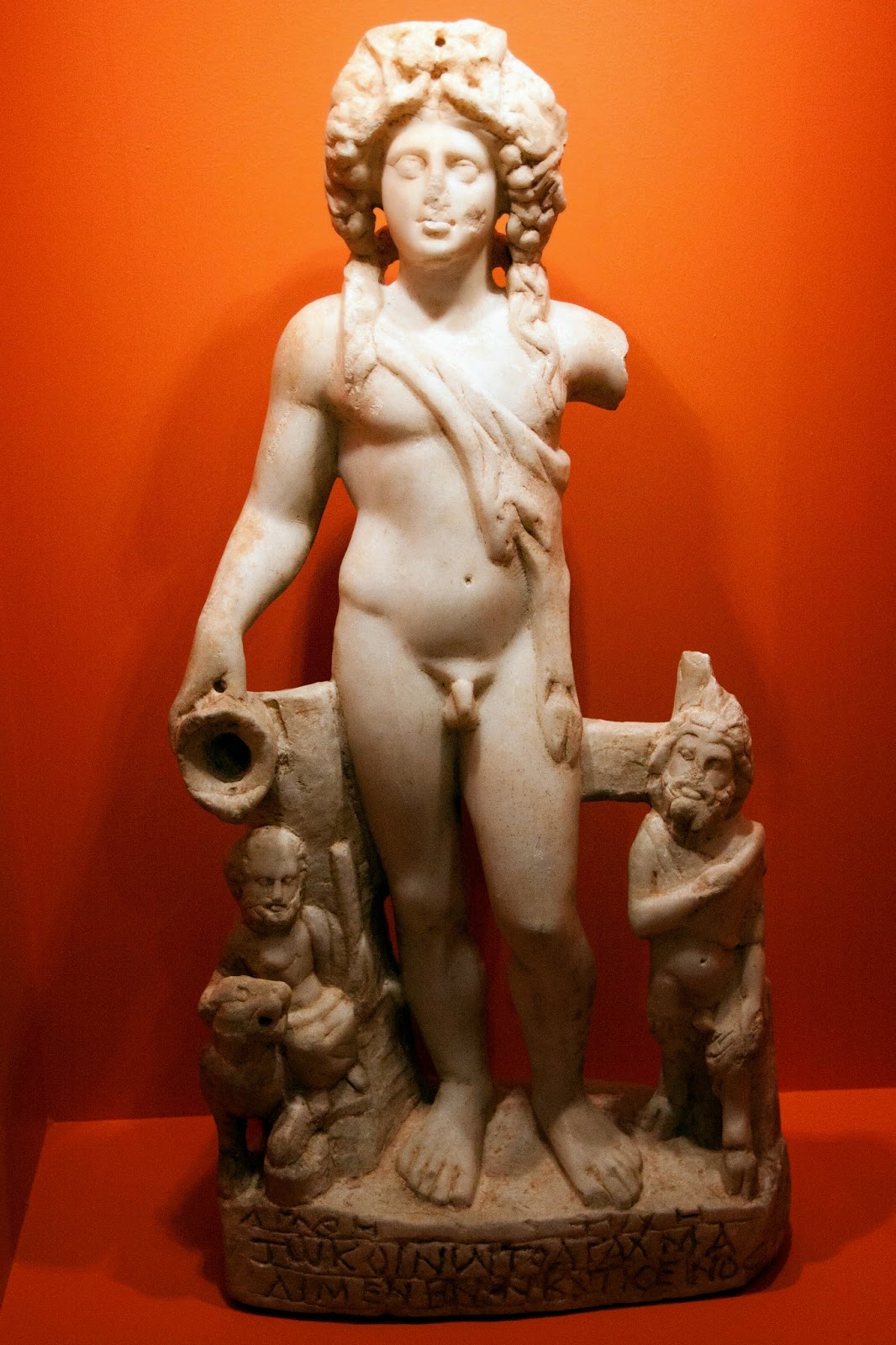
Selection of Roman and Greek imagery of cats. Top are mosaics, left showing cheetah and lion, right showing tiger. Bottom left statuette showing a sleeping Eros on a lion skin; bottom right is Dionysus leaning on a pillar with a panther.

Indeed the Romans and Greeks collected many animals and kept them in zoos/collections for their personal enjoyment, study, and for supplying others around the world (whether for games or celebrations). This private collection would mostly die out with the collapse of the Western Roman Empire, and the rise of Christianity limiting the number of exhibitions where wild animals were killed. However, many royal families maintained collections through the Middles Ages. Charlemagne is known to have held lions, whilst William the Conqueror is known to have held a small collection that was expanded and King Henry I is known to have held lions, leopards and lynxes. During the reign of Henry II, his son Richard, would gain such a reputation for fearlessness in battle he would go on to gain the name Richard the Lionheart. When he became King Richard I, he would also be the one that cemented the heraldry of England with three lions.

Three lion heraldry of Richard I, which would go on to evolve into the Royal Arms of England, right.

King John who would reign following Richard I death, would officially set up the royal menagerie which would go on to hold all manner of felids, and open to the public in the first zoo (of sorts). 600 years later it would be closed by the Duke of Wellington, and the animals distributed between Dublin and London Zoo. Until this day the zoo maintains several felid species, although most individuals are now located outside of the city in the larger Whipsnade zoo. Interestingly, there is currently a break from tradition in London, with the Asiatic lions being relocated temporarily whilst their enclosure is renovated and thus there are no lions being present in London for the first time in 800 years. The lions remain very much an English thing (although sometimes they were called leopards historically on the seals/heraldry), so much so that the Three Lions remains the nick-name of the football team, and the rugby team combined from the UK and Ireland is known as the British and Irish Lions.

Having focussed very much on the UK and Europe so far, its time to spread further afield. Whilst the lion has been the symbol of European royalty for millennia, it also has represented royalty in Africa, with Ethiopia probably the best example. The lion featured until 1975 on their national flag as a symbol retained from their days as an Empire. This lion is much more significant as it is the Lion of Judah and can be traced back as a symbol of the tribe of Isrealites of Judah, descended from the 4th son of Jacob in the Torah. The royal lineage was traced (supposedly) all the way from Solomon to the leaders of Ethiopia until Haile Selassie. Due to Haile Selassie being important in Rastafarianism, the lion is an important symbol to that religion too. The Lion of Judah has also been added to the official emblem of Jurasalem in 1950 with the foundation of it (or at least the western bits officially) as the capital of Israel. Whilst jumping around, but mainly in Africa, there are some interesting tribal traditions that remain. The most famous is probably the Maasai tradition where boys were supposed to kill a lion as a show of their warrior strength before becoming a man. This tradition has mainly died out as it illegal to kill lions, but there remains great prestige for those who do kill a lion in defence of livestock.

Lion of Judah featuring on the Ethiopian flag pre-1974.

So jumping from lions and Africa, to tigers in the Far East. In China, the tiger is the symbol of the monarchy much like lions in Europe. Interestingly the shape of the stripes across the tiger head look like the symbol for king (王), and therefore the tiger is known as king of the animals (interesting as lions are the king of the jungle in the West). The tiger plays continued significance as one of the 12 animals in the Chinese zodiac, and as an important figure in some martial arts. In India, the tiger is associated with both gods Shiva and Durga, whilst in Vietnam many temples are devoted to tigers. The Tamil people adopted the tiger as their symbol and namesake whilst they fought a major war for independence in Sri Lanka before being beaten a few years ago. One fact that I didn't know but particularly enjoyed whilst doing my research for this blog (particularly on wiki it must be said) is that whilst the West has myths of werewolves, the East has myths of weretigers which shift from human to animal form and back again.

In the Americas, the jaguar (as the biggest cat there) has featured in all MesoAmerican cultures. In the Olmec culture, jaguars appeared regularly as anthropomorphised, and possibly even werejaguar like. The Maya adopted the jaguar as various gods, and as with the lion in Europe, became associated with the ruling class who often wore their pelts to distinguish them, and the ruling families often incorporated the jaguar into their names. Indeed the Maya even developed a stringed musical instrument that when played makes a noise identical to a jaguar growl. The Aztecs followed the tradition of revering the jaguar, with the elite class of soldiers being Jaguar Warriors. To attain the status a soldier had to capture 12 soldiers in 2 consecutive battles (deemed more honorable than killing).

Jaguar warrior with club laced with obsidian shards, and a shield with feathers that conferred protective powers.

The Inca also have jaguars in their mythology, and at the Temple of the Jaguar in Chichen Itza as part of the coronation the kings had to walk under a frieze of many jaguars. The jaguars are not the only big cats of the Americas, with pumas (mountain lions/cougars) also present across much of North and South America. The Inca saw the puma as a good omen for wealth, and their ancestors today still believe it lucky to see one. The native tribes of North America however were divided over pumas. Those tribes on the western side thought seeing or hearing as evil and were associated with witchcraft whilst eastern tribes (e.g. the Seminoles and Shawnee) considered them noble animals and their remains were used to make powerful hunting potions.

So that roughly covers much of the older history of cats that I found. Undoubtedly I will have missed some big details and many views on cats. Whether its black cats and their bad luck, or covering humans hunting cats, and cats hunting humans (e.g. lions of Tsavo), or indeed humans using cheetahs to hunt. I feel my views on that may be very biased against humans in that respect. After all, many of the lion subspecies are endangered (or extinct); cheetahs inhabit a tiny fraction of their former habitat; leopards have had regional extinctions; tigers have had 3 subspecies go extinct and several other subspecies critically endangered (there are more tigers in Texas than there are in India!); pumas are much reduced across a lot of its former range; and the story is the same for jaguars too. And that is just the big cats, many of the smaller ones are experiencing much the same situation.

Retraction of the tiger home ranges. Historical in pale yellow, present in green. Note in the world map the presence of tigers around the Caspian and Black Seas for which no populations survive.

It would be interesting to see how each of the former cultures would react today to how we have dealt with our cat species, and indeed how we view them in modern culture (at least here in the Western world, which I know far more than for the rest of the world and for which it would be unfair of me to speak). Would they find our zoos an impressive collection of animals that inspire awe or appreciate them as conservation/reproductive tools? Would they view them as cruel enclosures for which the animals should be freed? I feel that the former is far more likely from European cultures a long way back, but maybe not for many cultures that maintained closer roots to nature who would probably view them as the latter. Would the cultures think it appropriate that many sports teams hold felid names (e.g. Jacksonville Jaguars)? How would they view our felines in the Lion King, or even Tigger in Winnie the Pooh? Would they be intrigued by how much we love and adore our cats as pets? Would they be entertained or ashamed by the amount of time we spent taking photos of our cats and putting them on the internet? How would they feel about this:

Breading. A strange craze that went around putting cats heads into a slice of bread.

Merry Christmas all, and hope you have a great 2015!