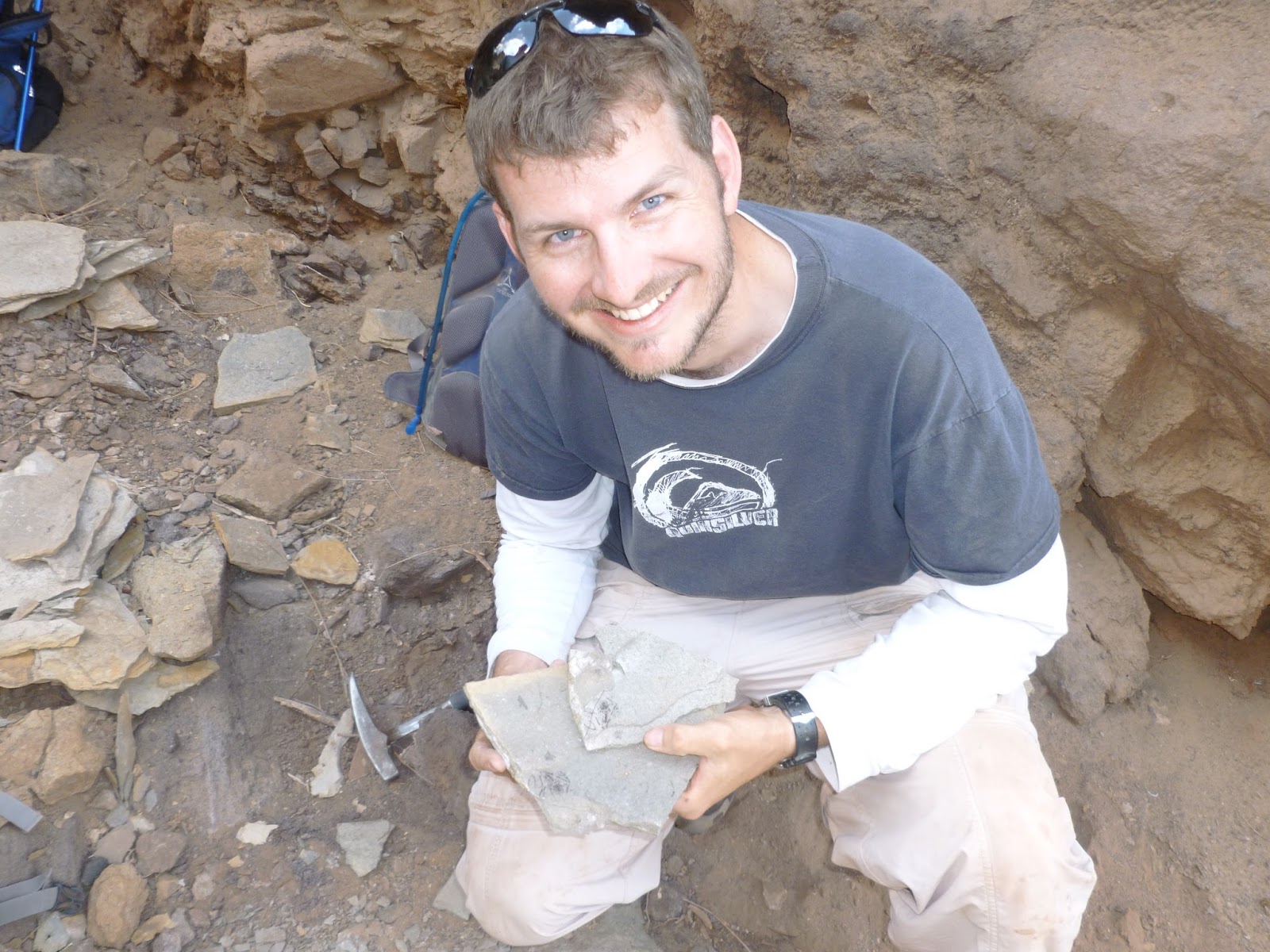
Tuesday, 5 July 2022

Reflecting on my career to date

My blog has been inactive a really long time, and a lot has happened since my last blog post on 31 December 2019. I had just moved to York to work at the Hull York Medical School. Below will give a fairly big update, but this was actually written as a piece of reflective work for a Postgraduate Certificate in Academic Practice aka PGCAP (an academic qualification that is now effectively required to teach in postgraduate institutions in the UK). It was written back around September/October so might be a little dated, and has undergone minor revision, specifically removing a few sentences about courses I was looking at attending that do not add anything to the story for you as a (hopefully enthused) reader.


Background

I was an associate lecturer working in the Hull York Medical School (HYMS) employed on a two-year full-time teaching and scholarship contract. During this time, I taught on the undergraduate medical programme, as well as the MSc in Human Anatomy and Evolution. At the end of my contract in September 2021, I left the medical school to move to the University of Liverpool on a permanent, full-time, teaching and scholarship contract.


Higher education has long been understood to be a continuation of the education process, with increasing knowledge and skill development in specialised subjects. In the UK, it is a continuation of the specialisation that students first undertake in reducing their number of subjects from GCSE to A-levels. Higher education covers the delivery and awarding of a diversity of degree levels from bachelors (Tier 6), masters (Tier 7) or doctorates (Tier 8). For many undergraduates in the medical school this description of higher education is a fair assessment of their views when they start; effectively a means to an end of developing the skills and knowledge to become doctors. In this respect, my contributions to higher education are that of a teacher.


I have always enjoyed teaching in previous positions, but teaching experiences are limited for most postgraduate positions in the UK unless the speciality is teaching. For me, the position within HYMS was my first major experience of teaching having completed a series of postdoctoral research roles prior to this post. It has therefore been critical for me to learn how to teach. This extends beyond the delivering of material, and highlights some of the other important aspects of higher education beyond the core curriculum. Increasingly universities are under pressure from the government to not just teach and develop students’ critical thinking, but to ensure students are ready for jobs from the moment they graduate. At the medical school, this ethos already exists, and the medical students are treated as junior doctors from day one. This policy holds the students to a higher level of conduct than most students across the university, fitness to practice panels are convened for violation of rules (instead of fitness to study, which also exist). This professional responsibility is also apparent in the anatomy laboratories where I teach. We have cadaveric material which is regulated under the Human Tissues Act. Behaviour within the labs is strictly monitored, and professional behaviours reinforced in keeping with the medical field.


However, higher education is more than just an education for students. Higher education plays an important role in social mobility and the economy as a whole. Up to 80% of the difference in earnings between sons from the same region can be traced to their education (Carniero et al., 2020). The Hull York Medical School was founded on the basis that there was a shortage of general practitioners in the local area. This was likely due, at least in part, to the relatively low income of the region which limits recruitment and retainment of doctors. The hope is that local students would be more likely to come and work in their home region (GMC, 2015), especially those who are first generation students, or those whose grades would normally have excluded them from medical degrees in other universities. This is particularly important as the most advantaged students are still over two times as likely to enter higher education, and almost five times as likely to enter universities with the highest entry tariffs (UCAS, 2020).


I am incredibly lucky as I come from a privileged background as a white male who went to a public school. But, at the same time my sister and I were the first in our family to get degrees. We are part of the generation where massification of higher education has become the norm and have benefited from it. With massification, higher education has increasingly become a business where the commercial benefits of a degree may be a bigger influence for attendance than learning for the sake of learning. My parents have been highly successful in their chosen careers, but they would not be qualified for their jobs today as they did not obtain the required degrees or qualifications. Higher education provides the opportunity for many students to obtain qualifications and degrees that allow social mobility, but I am concerned rising fees for attending university, and rising costs for repayment of loans particularly for lower earning individuals (Independent, 2021) are actually running the risk of undoing a lot of the gains made in the last decade.


This massification and commercialisation of higher education plays a role in how universities market, and manage, their courses. STEM subjects often take priority as they are often subsidised by the government in alignment with their priorities. As such we have seen closures of not just subjects, but entire departments if they are viewed as underrecruiting or not profitable (e.g. Sheffield Archaeology – BBC, 2021). We also have seen universities relying more on external sources of funding such as research and third stream activities. For the University of York, almost 25% of the university’s income derives from research grants (vs about 50% directly from student teaching – University of York, 2020).


With research being such an important component of university income, there is a lot of pressure for staff to produce excellent, innovative, impactful research, driven increasingly by the Research Excellence Framework (REF). The REF ranks university research outputs, and government funding is adjusted in line with rankings. As such there is much “gaming” of the system with universities strategically hiring staff around REF cycles. Additionally, the creation of teaching intensive positions splits academic workloads, so academics who are viewed as producing the best research are freed from large teaching responsibilities. However, the quest for high quality research extends even to those on teaching heavy contracts especially within the Russell Group universities where research-led teaching is the norm. Research was one of my major motivations about academia. I really enjoy finding the solution to complex problems and my previous postdoctoral positions were purely research. However, my own research has been heavily restricted due to being on a teaching and scholarship post, with Covid mitigations further reducing research time. However, I have had to transition my research to student projects and developing their skills. This is particularly true for postgraduate students who have large research projects as part of their programmes and the MSc programme I taught upon prides itself in developing the students into researchers with around half of the students going onto doctoral programmes.


The unusual development trajectory of academic staff from undergraduate to lecturer by way of research positions leads to an unusual situation. Many early career researchers, myself included, have spent years honing their research skills. However lecturing posts require teaching experience, as well as additional management and citizenship skills that are not often developed in research posts. York defined academic citizenship as “activities additional to ‘normal’ teaching and research… [and] engagement with those elements of university life that enable the smooth and collegial operation of the institution” (University of York, unknown). For me, this included large numbers of committees, including Board of Studies, Postgraduate Boards, Student Support, Covid planning and mitigation, as well as fitness to study and the HYMS ethics panel. These commitments absorb a huge amount of time, but have been hugely fulfilling particularly with regards to ensuring everything has continued to run smoothly, and students have been fully supported through the incredibly difficult Covid restrictions. Additionally, I was expected to attend open days and be involved in outreach events (for example Festival of Ideas where I hosted a speaker), which continue to be vital for recruitment and the maintenance of the university image. I found these events the most rewarding as they allowed for engagement with a wider audience, including those who may have been uncertain about attending university.


Disciplinary identity

My role at the medical school has continued drag into question where I view myself with regards to my discipline. Since my undergraduate days I have always viewed myself as a palaeontologist, someone who studies fossils. However, through my PhD, postdoctoral roles, my associate lectureship and my current lecturer position there are countless other subjects, disciplines or even fields, that I could use to classify myself. Palaeontology on its own is the intersection of biology and geology, with fossils being the remains of life preserved in the rocks. My PhD in Geology was awarded for my thesis on dinosaurs. My thesis involved understanding the anatomy of these species and using biomechanics to study their feeding. Biomechanics itself is the intersection of biology and physics to understand how biological things move, whether this is feeding, locomotion or any of the multitude of other movements. The tools we use to study a lot of the biomechanics derive from engineering. My research since my PhD has and continues to follow this same pattern and has also included worked linked to veterinary medicine. I have also transitioned from focussing on non-human animals, to teaching anatomy at the Hull York Medical School, and now the University of Liverpool. It therefore is incredibly difficult to pin down just where my academic “allegiance” lies.


So where do I place myself? My discipline could be natural sciences or even the professions/applied sciences with the engineering and medical backgrounds. I could be a biologist, physicist or an earth scientist. However, I would still align myself most closely to biology. Within biology I fall across anatomy (comparative and human), ecology, evolution (particularly systematics), palaeontology, and zoology. Funnily with such a diversity of ways I could define myself, and having published more on modern species than fossils, I would still be inclined to call myself a palaeontologist first and foremost. Why this would be is likely due to a lifelong dream to be a palaeontologist rather than any pragmatic reason.


Palaeontology as a discipline is small and highly specialised, at least relative to either biology or geology. However, defining its boundaries is increasingly complex, and I highlighted some of this complexity within my own background. In the UK, only a handful of universities offer undergraduate degrees and therefore most palaeontologists have undergraduate degrees in one or other of main disciplines (i.e. biology or geology), and only at postgraduate level develop the palaeontology interdisciplinary identity. However, because palaeontology is a niche discipline most researchers remain in either the biology or geology/earth sciences departments at least within UK universities. Historically palaeontologists were linked to anatomy groups, and with funding increasingly difficult to come by, this pattern is re-emerging across both the UK and the USA. Whichever department they end up in, many palaeontologists continue to collaborate interdepartmentally, and this may be further necessitated by the fact that many funding agencies now expect applied outcomes of research to secure funding.


I suspect many palaeontologists would also have the same debate as I over their exact identity, and likely also recognise themselves as multidisciplinary. Because of this, many are members of organisations or societies outside of their institutions that align closely with their research interests. For example, vertebrate palaeontologists (including myself) may be members of the Society for Vertebrate Palaeontology or other allied societies. These societies tend to advance the science whilst supporting and fostering education and protection of resources (Society of Vertebrate Palaeontology, 2021), whilst providing a set of regulations to which members must follow that can be more stringent than those of their host institutions. Indeed, these societies can play vital roles in lobbying, for example over national parks in the USA (Underwood, 2017), where institutions may not be able due to restrictions from governments. However, because these societies tend to be research focussed, I find it hard to justify my membership when I am not carrying out research in the field.


I have highlighted my internal debate over my identity when I can and do recognise how multidisciplinary my background is. It is further complicated by my current post being a permanent teaching position on human anatomy with limited research time to keep up to date with the palaeontology discipline with which I identify. I am conflicted by my want to do palaeontology research, and the inability to do it without aligning to a department that has different priorities, i.e. teaching anatomy. This tension has led to a lot of debate about my role in academia which I will discuss further below.


Professional and academic maturation and development

My motivations have long been driven by a single-minded want to be a palaeontologist; a childhood dream that I’ve been questing to fulfil. This intrinsic motivation drove the selection of undergraduate and PhD positions. In the following years, I worked in 2 postdoctoral roles separated by a short technician role. The choice of jobs that I have applied to was mostly driven by their ability to advance my career and learn new skills. That being said, it would be impossible to say I picked those jobs over any others, rather I had the roles because they were the places that I had applied to that picked me. Indeed, this would be the norm within the UK, with 66.6% of research-focussed staff on temporary contracts (HESA, 2019), and postdoctoral roles probably filling the majority of these roles. Despite a large number of publications, I was struggling to find a permanent lectureship position anywhere due to shortcomings in my CV, particularly a lack of teaching experience and a lack of research funding. As such I applied for the temporary associate lectureship at HYMS which was on a teaching and scholarship pathway.


The associate lectureship was based within the anatomy group, but maintained the palaeontology connection I had wanted through their MSc programme. I have been able to gain an abundance of teaching experience across the two years at both undergraduate and masters level, as well as leading supervision on masters projects, and co-supervising a PhD student. I also took over the management of the MSc programme as acting programme director to cover a maternity leave so gained experience across recruiting.  However, the last two years were not easy. Covid arrived six months into my contract, at the same time I took over programme director roles. This meant that I was actively involved in the management and policy making within the medical school for the postgraduate taught programmes. Whilst my contract was teaching focussed, I should have had time for research, but due to workload changes ended up not doing much research across the last two years except through my PhD student.


The lack of research has been hard as it was something I really enjoyed within academia. I have loved teaching, but I feel the loss of my inquisitive side and the single-minded quest for answers to questions that intrigue me. I withdrew from the Society of Vertebrate Palaeontology, unable to justify the cost and membership when I was not actively researching. As such I have not attended conferences which allowed dissemination of my work, as well as networking and keeping up with the field as a whole. I’ve also felt increasingly disconnected from the palaeontology discipline with the majority of my work focussing on modern human anatomy.


For me the hardest reality was that academia today is an uncaring business. There is no loyalty from the university to its staff. If there is no business case for you to be there, you will not be kept on. Despite doing an enormous workload over the last two years, and my team at HYMS wanting to keep me, the business case could not be made to extend my contract beyond another six months. Academia relies so heavily on its staff being passionate that they will work above and beyond their workloads, aware if they do not academics will not progress or will be readily replaced by the many others looking for jobs. All of this happens whilst academics are paid far less than that of other equivalent non-academic/industry careers (Stevens, 2004). It has almost been eight years since submitting my PhD, and in that time, I have had four short-term contracts. In many other jobs I’d be probably not be considered early career, let alone to have been on a temporary contract. My situation is far from unique in academia, with the majority of short-term contracts going to early career researchers (ECR - a vague term that seems to encompass anything from PhD to lecturers within a few years of starting permanent posts). However, it is the current generation of ECRs in the UK who may have even worse career prospects. The massification of higher education has produced a large number of students completing PhDs, whilst not producing even close to the same number of faculty positions (Ghaffarzadeganet al., 2014). Brexit and the Covid-19 pandemic have affected the economy, individual academic’s outputs, and university income. All of these will have negative impacts on university finances with knock on effects for hiring decisions. 


I would love to continue to complain vociferously about how crazy academia as a career is, but I am one of the lucky ones; I have now obtained a permanent position. It is far from my dream position as it remains teaching intensive, but it provides security that my other posts did not.


Future

I do not know what I want with my future in academia anymore. I have arguably been rewarded for my hard work by obtaining a permanent post, but I am very jaded by the last two years. Covid has restricted my ability to see family who are overseas, and my partner remains in York whilst I have moved again for my career. I have questioned my decision to stay in academia now more than ever before, and am reassessing my priorities in life. There remains the question of what I do instead, and for that I do not have a good answer.


In my dream world, I would love to stay in academia. There are moments of pure joy, and I have found it hugely rewarding to celebrate my students’ successes. In previous positions I have also loved doing research, so for now my goal is to develop some research and advance myself to a research position. This is most likely to be done by moving institutions again due to the complexity of transferring to a teaching and research contract from my current teaching one. However, I am not in a rush to move again having just moved for a new permanent position that provides a modicum of stability for the first time in my academic career. I will have to work to secure my current position over the next three years – the duration of my “probation” before confirmation. That will require me to continue developing my teaching, including new PGCert courses, supporting and supervising students and taking on leadership roles as I had done at HYMS.


Of particular concern to my current position is the development of my teaching skills. I have been teaching for two years, and in that time Covid has really accelerated changes to how teaching is delivered with increased use of online lecturers, flipped classrooms and blended learning. With more online delivery, I need to work on developing new skills that allow for better delivery of online content. The two new PGCerts that are being planned are hoped to be primarily online, with two residential weeks where students will attend in person. Whilst I have delivered material online through Covid, that was based around emergency changes, and materials developed for online specific programmes will have to be to a much higher standard. Longer term, I suspect I will look towards gaining a senior fellowship in the higher education academy, which increasingly has become used as an indicator for promotion within many universities.


The other major career development step will be securing some research funding. To date, my research has been carried out through other people’s grants rather than securing my own. Therefore, my CV is lacking one of the major requirements for most research positions. As such I will have to be clever and try to eek out some time to apply for grants between the teaching workload. I have started writing my first grant as primary investigator and will work with the Research Support Office and attend their courses with the aim of maximising funding success. I will continue to look for opportunities to collaborate with colleagues both within my institution and across the globe, and aim to employ PhD students through various doctoral training programmes (e.g. ACCE).


If I fail at finding funding or securing a research position, I cannot say what the next steps would be. I will have to see whether the new job brings satisfaction, and how my other life priorities work together. I have sacrificed a lot for my career over the years in the hopes it would bring my happiness, but I have found more happiness outside of work of late. Balancing my personal and work lives in such a way that brings me joy is my biggest goal.


References

BBC, 2021. University of Sheffield confirms archaeology department closure. Available at: https://www.bbc.co.uk/news/uk-england-south-yorkshire-57820390. (accessed 10/09/2021)

Carneiro, P, Cattan, S, Dearden, L, Erve, L, Krutikova, S & Macmillan, L (2020). The long shadow of deprivation: differences in opportunities across England, Social Mobility Commission, [London].

Ghaffarzadegan, N, Hawley, J, Larson, R, & Xue, Y (2015). A Note on PhD Population Growth in Biomedical Sciences. Syst. Res, 32, 402– 405

GMC (2015). Review of Hull York Medical School. Available at: https://www.gmc-uk.org/-/media/documents/Hull_York_Medical_School_FINAL.pdf_60203362.pdf (accessed 08/09/2021)#

HESA, 2019. Higher Education Student Statistics: UK 2017-2018.

Independent (2021). Government to cut threshold for graduate repayment of student loans, report says. Available at: https://www.independent.co.uk/news/uk/politics/student-loan-repayment-graduate-earnings-b1927413.html (accessed 01/10/2021)

Society of Vertebrate Palaeontology, 2021. About the society. Available at: https://vertpaleo.org/about-the-society/ (accessed 10/09/2021).

Stevens PA (2004). Academic salaries in the UK and US. National Institute Economic Review 190, 104-113.

UCAS (2020). End of Cycle Report 2020. Available at: https://www.ucas.com/file/396231/download?token=qcQl7Fyy (accessed 08/09/2021)

Underwood, E (2017). Q&A: Why fossil scientists are suing Trump over monuments downsizing. Scienceinsider. doi: 10.1126/science.aar6856

University of York (2020). Summary of funding and expenditure. Available at https://www.york.ac.uk/about/funding-and-expenditure/ (accessed 10/09/2021).

University of York (unknown). Academic promotion criteria – academic citizenship. Available at: https://www.york.ac.uk/admin/hr/pay-and-grading/promotion/citizenship/#intro (accessed 11/09/2021)


Tuesday, 31 December 2019

Look back on the decade

A lot of people have done these on Twitter, so thought I'd do one too. However, instead of doing it on Twitter, I thought I needed to reawaken my blog after it had a quiet 2019. I'll explain why when we get there...

2010: I finished my degree: MSci in Palaeontology and Evolution from the University of Bristol. I received a 2(1). Slightly disappointing for me as I was always a super high achiever through school, but I didn't do as much as I needed to to achieve a 1st so cannot complain. However, my project on spinosaur snouts and their biomechanics would lead me down my current career path. I also was accepted to do, and started, a PhD at the University of Bristol where I would transition from spinosaurs to ornithomimosaurs.

2010 was also the first time I went on a dig, joining a very experienced crew from the Museum of the Rockies. I helped dig up the skull of "Yoshi's Trike" with the remainder of the skeleton being dug up the next year when I wasn't there.

2011: I spent a large chunk of my year playing with ostrich heads for my PhD research. I submitted my thesis from my masters for the first time, and got major revisions for the first time. I visited Canada to go on my second dig, this time with University of Alberta where we spent a large chunk of the time digging up a Daspletosaurus. Following the trip I got to visit the collections in the Royal Tyrrell Museum and the Royal Ontario Museum which were incredible. I also attended my first conference, SVP in Las Vegas which I thought was a lot of fun, but I know the feeling was not shared by all.


2012: I spent a lot of the year working on CT scans of ornithomimosaurs, including a couple I had seen in Canada. No digs this year. I attended my first ProgPal conference in Cambridge, and was off to China and Mongolia to have a look at the collections there. After the summer I went to SVP in Raleigh, NC. I also resubmitted my spinosaur paper and had the same result, with more major revisions to make. I supervised masters level student projects for the first time.

2013: I started the year with my first SICB conference, in San Francisco. I then spent the year finishing the research and writing up my PhD, with a couple more conferences breaking up the year - ICVM in Barcelona, and my third SVP conference, this time in Los Angeles. I submitted my PhD on Thursday 12 December. I had originally planned to submit on Friday the 13th, because why wouldn't you? As it happened, I finished the day early and used the extra day to tidy and pack because I was moving to London in the new year to start a job at UCL and RVC. I finally published my Masters research!

2014: I started my first postdoc in February having taken a month and a half off work to recuperate from the PhD writeup. It was needed as two people independently said I "looked well". A sign that sometimes a break is good. The postdoc was on the evolution of felids, particularly their vertebral morphology and muscles and how that affected their biomehanics. A lot of the year involved looking at the evolution of body size within the group, but I did start dissecting various felids. I would finish 2014 in India in the field in Tamil Nadu with Anjali and her group. I attended SVP again (Berlin), and competed in the Romer Prize session (I did not win), and started my blog! Across the year I published 2 papers, and had more in review.


2015: I started the year in the field of India. On the return to England it was lots of dissections to try to complete our study of cat muscles. I would go to SVP in Dallas, which turned out to be the last for a while with a new job in 2016. I finally got back into the field, this time to Argentina. I had my best year for publishing to date with 4 accepted.


2016: I spent the first part of the year reconstructing fossil felids, initially with brains (picked up by a summer student and accepted for publication), and then muscles on Panthera atrox. I went on to build SIMM models of modern felids (domestic cat and lion), but sadly these still remain on the long to do list! We had a student from the vet college also get permission to do work with various zoological collections so we measured forces and join angles in several living cat species. I was able to get back to Argentina again with Anjali and co. and I attended my second ICVM, this time in Bethesda (near Washington DC). In August I was expecting to be unemployed but was able to secure a short technician post at RVC which allowed me some time to complete work. I was also lucky enough to be hired on to start my next postdoc on the DawnDinos project. 4 more papers accepted.


2017: The early part of the year was spent working on CT scans of Mussaurus whilst we awaited tinamous and crocodiles for the project. When the crocodiles eventually arrived we carried out the surgical procedures and experimental protocols collecting lots of data. However, 2017 was a year where I first ran into my mental health problems caused through burnout. Whilst I will never be cured, it is at least now managed. I published 2 more papers.

2018: The year started with SICB as it returned San Francisco where I talked about Mussaurus. Experiments continued, and thankfully concluded. I was able to escape back into the field, again to Argentina, but this time down in Patagonia. There was a lot of work analysing the experimental EMG data we collected, and incorporating some from historical data collection. I returned to SVP (in Albuquerque) after a few years away and went on my first field trip at an SVP conference into a fun little quarry. No papers this year...

2019: This year has been an unusual year. After a long publishing hiatus (for me at least), I was able to get a couple of papers out, including the Mussaurus paper which got picked up by some press which was an interesting experience. I was also invited onto the editorial board of PLOS One so now am handling papers! Besides that, there was a lot of data processing as part of the postdoc. I got to go to ICVM in Prague in July, but by the summer it was known by lots that I would be leaving the RVC. I have been looking for permanent jobs for a long time and having interviewed and come close to a couple of jobs, I was offered an anatomy assistant lectureship at the Hull York Medical School (University of York campus). Whilst not permanent, it provides me a 2 year teaching opportunity with a lot of lecturing, particularly to medical students (I'll write more about the job search over the last few years in a blog in the new year). In August I finished at the RVC, and left London (after 5 years), and moved to York. It has been a busy learning curve, but it has been fun and I am enjoying the teaching. Next term will be busier, but after this year I should have completed all the prep to make my second year of teaching much easier.

That's my decade in review. No doubt I have missed lots of things or at least glanced over them, such as having some very good students. My first Masters students having finished their PhDs and I am very proud to have been even a small influence in their careers to date.

I wish everyone a happy 2020, and a fruitful decade whatever it may bring.

Saturday, 25 May 2019

3D printing a crocodile

I have to say I was surprised how enthused everyone was for the 3D printed crocodile. It was the most interacted tweet I have ever done, and as promised I am ensuring all of the files are available so if people are keen they can do their own:


All files will print on a print bed that is 20x20cm, and are all scaled to the same size. However do check and scale up or down by 10 if required.

Forelimb (L - R)
Posteriormost Caudal vertebrae
Method
So for anyone wondering how I put it together, it was fairly straight forward, albeit time consuming. If you don't have a set of 3D files (in this case ours were generated from CT scans and segmented in Mimics), there are an abundance of online 3D scans now in places like Morphosource, or phenome10k.org and even thingiverse (the Makerbot repository where I've uploaded my bits), but I strongly encourage you to check the specifics with regards to the use of their scans and to only print things you are allowed to.

The next steps involve tidying up your meshes, e.g. decimation of your mesh to make it smaller/easier to use, and remeshing to standardise triangle sizes etc. I recommend Meshlab for a lot of this as it is free. Google is also full of how-tos, but I am happy help. Feel free to reach out here or Twitter.

I then separated the sections I wanted using the select tool and deleting the unwanted bits. This could, and should, be done in segmentation if you have the scans, but I have to admit I wasn't sure how I was going to separate things when I first started. You will also likely get 3D models online that need separating, so not bad practice. In the case of the vertebral column where I separated the different regions, holes were created in the mesh (where the vertebrae were connected as a single unit). I fixed these in Blender (again a free download) by selecting the nodes in Edit Mode and making new faces to fill the holes.

For sections I wanted to fuse together I created a cylinder where an end was in a bone of interest.
Right lower leg and foot with cylinders shown between all the bones.
In the case of the osteoderms, I created a scaffold of cylinders that would sit on the vertebrae, and then vertical cylinders to attach to the osteoderms:

Scaffold for the dorsal osteoderms (from shoulders to pelvis) in the foreground, with complete scaffold with fused osteoderms for pelvis in the background.
Originally, I used the Boolean tool in Blender to union join the various parts and the cylinder:


but I found that this was not necessary for our printer/software (printing done on a Ultimaker 3 extended, Cura software) so later parts just had cylinders and bones saved together as a single obj. Your experiences may vary!

I printed all of the model on the Ultimaker 3 as I said above, using a normal 0.15mm layer thickness, automated support in the zig-zag shape with chunks enabled, and either a raft or brim support using generic PLA (2.85mm thickness) purchased from Amazon. We have the option of using 2 materials, and this probably would have been better to print using soluble material (PVA) for the support as it took a long time to manually remove the supports but as this was a test it was cheaper and far quicker to print just using the one material. It is not a perfect method and some of the smallest bits have really thin supports and broke during separation so some superglue was used to reattach them. I suspect something like a soldering iron (anything that gets up to 200C) to quickly remelt the ends could also work but please use caution and common sense!

Because our model was printed in chunks (due to the 20x20cm plate), but the original animal was obviously fully connected I created some supports for the dorsal vertebrae to get everything to the appropriate height and to ensure a realistic look. This was achieved by creating a cylinder or cube in Blender, and scaling it to be about 1.5 times wider than a single vertebrae, and a bit longer than 2 vertebrae. I then boolean subtracted the vertebrae from the cylinder, creating a vertebrae cradle. The concave surfaces of the cradle (where there are overhangs) were deleted in the edit mode (and new faces were made to fill the holes) so that the print could be slotted into the cradles.
Vertebral cradle
A disc at the horizontal level of the sternum was created and then a cylinder (other shapes available) created to connect the two (same method as for connecting bones). For the support of the vertebrae over the sternum I created a hollow where the sternum was so that the support would sit flush on the ground with the sternum passing between it by boolean subtracting a slightly enlarged sternum from the underside of the disc (the same procedure as for the vertebrae and cylinder except now for the disc).
In place in the model showing off the front support also has a gap for the sternum.
For our printer there is less support created if you change the shape up to whatever the minimum overhang angle (45-60 degrees depending on the machine) so other shapes may be better for print times/reducing support structures.

I hope this all makes sense, let me know if it doesn't and I'd love to see what you all achieve. If any of the meshes misbehave, let me know and I will try to upload corrections.

Monday, 20 May 2019

4 legs good, 2 legs better: How a dinosaur grows

The newest paper I've been involved in just came out, this time looking at Mussaurus and how it grows up (quick summary right at the end):


What is Mussaurus?
Mussaurus is a sauropodomorph. If that doesn't make things any clearer, it is an early relative of the long neck, long tailed dinosaurs we know as sauropods (things like Diplodocus, Apatosaurus, Brachiosaurus, etc.). Found in Argentina, it is now dated from the early Jurassic (about 200 million years ago), having previously been dated to the Triassic.
Simplified phylogeny/family tree of sauropodomoprhs modified from Otero et al., 2015 with all silhouettes from phylopic.org
The name Mussaurus translates as "mouse lizard", and comes from the fact the first individuals found were small hatchlings that fit in the palm of your hand. In the years since its description in 1979 there have been many more individuals found covering a range of ages and associated increase in size.

Ageing a dinosaur
Dinosaurs, like trees, have rings that can be counted to determine how old they are. These lines of arrested growth (LAGs) are found particularly in long bones. It gets a bit messy with many long bones having marrow cavities (like in humans) which as the animal gets larger, so too does the marrow cavity which starts obliterating the innermost LAGs. This means that the age estimates are often given as a minimum. For our study we worked with 3 ages of Mussaurus: the smallest being palm sized and based on the sizes of eggs found nearby presumed to be hatchlings; a bigger group with individuals being determined to be under a year (no LAGs), but likely close to that age; and the largest at least 8 years old, and possibly up to 10 (which will be the age in all of my graphs below). 
Approximate sizes of the three different age groups from hatchling (bottom left), to yearling and adult.
Weighing a dinosaur
There are many ways to estimate the weight of a dinosaur but we chose 2 methods that are regularly  used in palaeontology. These are convex hulling and spline-based reconstruction:

Convex hull - this method works by building a simple geometric "box" (a hull) around bones, or series of bones to give a volume. All of the volumes are added together and multiplied by an estimated density for animals, and then multiplied by a correction factor. This correction factor is needed because the hulls are not biologically accurate (think of the amount of muscle usually on bones - see this earlier blog talking about it using lions). This method has been validated for calculating masses for mammals and birds.

Spline-based reconstructions - this method involves creating a series of hoops around various parts of the animal. For example, were the rib cage is, the hoop is built from the top of the vertebrae, around the ribs, and the gastralia/sternum. For the legs, different areas get hoops of different sizes as determined from the closest relatives of dinosaurs, birds and crocodiles (Allen et al., 2009). All of the hoops are ultimately joined together to create a 3D volume. The airways and lungs are also included. However there is variation between birds and crocodiles, and greater uncertainty with dinosaurs, so each of the segments (e.g. tail, chest, neck, arms, legs, airways/lungs) all get scaled up and down to create models with maximum and minimum estimates that are multiplied by the density of modern animals to get a mass. We can be fairly certain the real value lies somewhere between the extremes, but likely closer to the middle than the extremes.

Mass estimates between the two methods for Mussaurus.
The results between the 2 methods for masses are fairly similar. Hatchlings have a mass somewhere around 60-80g (about the size of a baby chicken/chick), by the time they are a year old they are 100x bigger at 8.19-8.30kg. That is an incredible amount of growth in a year. Just think about human babies being born around 3-4kg (6-8lbs) and being 300-400kg by the time they were 1 year old. For some of our domesticated birds this rate is exceeded, with modern turkeys carrying out this transition in size from 60g hatching to 8kg in 14-18 weeks (1/4 of the time) (Sogut et al,. 2016). In the next 7+ years of life for Mussaurus they continue growing at an incredible rate getting another 200x bigger reaching at least 1200-1500kg (about the size of a rhino or hippo). These growth rate are not unusual for dinosaurs, and the energetic requirements and stress associated with growing so much so quickly may be one of the major reasons there are so few "fully grown" adult dinosaurs of any species known with most dying before they attain their largest potential mass.

How can we use mass to infer posture?
Imagine you lean forward to touch your toes. Assuming you are flexible enough, this isn't too difficult. Now imagine having a really big head, or a long neck, or big arms and try again. You would likely find yourself tipping forwards. To counter this you might be able to bend your knees as if you were doing a squat and/or sticking your butt out to help keep yourself upright. However if your centre of mass gets too far forward, i.e. beyond your ability to get your foot (and by extension your knee) under your centre of mass, you will fall forward. This could be countered by reducing the mass of the front of your body (e.g. T. rex having tiny arms), having a big tail, or becoming quadrupedal (walking on all 4 limbs and using your arms to help support your mass). This simple biomechanical concept is what we applied to Mussaurus. The models allowed us to estimate the centre of mass for the different ages, and see how different regions influence the centre of mass.

We found that in the hatchlings the centre of mass is very far forward, about the length of the femur forward of the pelvis. This is the maximal theoretical limit of a centre of mass for a biped, assuming they held their femora horizontal when walking and only moved their lower legs. This of course is incredibly unlikely, and only seen in some real oddities today like penguins (who have of course become upright, and waddle), and also ignores the reality that you cannot put your knee perfectly forward of your hip as the stomach would get in the way (but you could move it to the side of your stomach, but this would have the effect of not being able to get your knee as far forward). As such we propose that Mussaurus hatchlings are quadrupedal. Through their growth the centre of mass moves back to a position that is very plausible for bipedal animals.
Centre of mass (COM) changes through ontogeny for Mussaurus. A COM of 1 would be directly between the shoulder blades, whilst a COM would be between the pelvis. 
However, having a centre of mass that is closer to your hips does not instantly make you bipedal, but our data, combined with a previous study showing that the adult Mussaurus could not get its hands flat on the ground (Otero et al., 2017), strongly suggest it was bipedal. Therefore Mussaurus follows an human-like transition from being quadrupedal when young, but becoming bipedal when adults. This transition is associated with a relative reduction in head and neck size and a relative increase in tail size.

How does this fit in our understanding of sauropod evolution?
We know that the later sauropodomorphs, the sauropods, were quadrupedal. Their giant columnar limb bones in both their arms and legs are built to support their weight. Early sauropodomorphs are smaller with much less robust forelimbs and are likely bipedal. We know there is a transition from biped to quadruped somewhere in the group but does our study help? Many studies suggest that "ontogeny recapitulates phylogeny", i.e. where your evolutionary history is reflected in how you grow. If this was the case we would expect Mussaurus to show a bipedal to quadrupedal transition not the other way round. This shows that the evolutionary history of locomotion within the sauropodomorphs is far more complicated than it first appears.

Quick conclusion
The take home/TLDR: We used computer modelling to discover a very interesting growth sequence for Mussaurus, which not only grows at a rapid rate, but transitions from being quadrupedal to bipedal during it.

References

Allen V, Paxton H, Hutchinson JR, 2009. Variation in Center of Mass Estimates for Extant Sauropsids and its Importance for Reconstructing Inertial Properties of Extinct Archosaurs. Journal of Anatomy 292, 1442-1461.

Sogut BI, Celik SI, Ayasan TII, Inci H, 2016. Analyzing Growth Curves of Turkeys Reared in Different Breeding Systems (Intensive and Free Range) with some Nonlinear Models. Rev. Bras. Cienc. Avic. 18, 619-628.

Otero A, Allen V, Pol D, Hutchinson JR, 2017. Forelimb muscle and joint actions in Archosauria: insights from Crocodylus johnstoni (Pseudosuchia) and Mussaurus patagonicus (Sauropodomorpha). PeerJ 5:e3976.


Friday, 8 March 2019

Measuring muscle activity in birds and crocodiles

After a long slog the newest paper is out, and as the title of the post suggests we've been measuring muscle activity in birds and crocodiles:

Relating neuromuscular control to functional anatomy of limb muscles in extant archosaurs

All muscles in vertebrate bodies are activated by electrical signals, usually from nerves. These activated muscles then contract resulting in some form of movement. The electrical signals that activate the muscles can be detected by sensitive equipment using a method known as electromyography - or EMG for short. A fancy version for just hearts is often used electrocardiogram (EKG/ECG). In humans these electrical signals can now be measured by attaching skin based electrodes, but when this technology was first being developed people would use wires attached to needles they would inject into the muscle. However, these methods don't tend to work easily for lots of animals: skin based electrodes need clean, moistened, thin skin; needles need animals obliging to leave them in place! As we have been working with crocodiles (thick skin with bony osteoderms within them), and birds (covered in feathers) and neither were tame, skin and temporary injected electrodes were not options. Therefore we had to carry out surgery to directly implant wires into the muscles, and connect them to a backpack on the back of the animal that could not be damaged by the animals.

Now this might sound extreme, and invasive procedures are, but because of this all of our procedures passed through ethical approval from the universities, and the UK Home Office, with the goal of collecting the highest quality data, whilst maintaining animal welfare, and using the fewest animals. In all, the study covered work from DawnDinos with tinamou and crocodiles, as well as previous unpublished work on emu, quail, turkey, pheasant, and guinea fowl.

All of the animals were placed within enclosures (either a runway or a treadmill) and their backpacks were plugged into the computer for recording. We then measured muscle activity as the animals walked/ran, and distilled it into strides which comprise stance (toe-on to toe-off) and swing (toe-off to toe-on):

Figure designed for the paper that never made it. Showing the direction of travel and what we mean by toe-on and toe-off.

Figure 2. from Cuff et al., 2019. Representative EMG signals from emus of three ages. 
People have studied EMG in animals for a while, so why is our study interesting?
1) We provide the first data for the palaeognathous birds (the group which include ostrich, emu, tinamou, kiwi, cassowary and some extinct birds like moas and elephant birds).

Whilst this may not sound particularly important, almost all of the published bird data to date comes from a small part of modern bird diversity, (mostly the group which include chickens, quail, guinea fowl) and as such it is vital to understand whether these few species are representative of birds and how much variation there is. From the overlapping datasets, it appears that birds are pretty consistent.

Fig S8. from Cuff et al., 2019. This figure shows an averaged and rectified (all values made positive, as EMG signals are both positive and negative) signal for the lateral gastrocnemius (part of the calf muscle). Foot-on/stance starts at 0.0 on the X-axis, and ends at the vertical line somewhere between 0.4 and 0.7 when swing/foot-off starts. Hopefully, it can be seen that most birds have peaks both at the very beginning of stance (left most part of the graph), and then at the end of swing (right part of the graph).
2) We provide the first EMG data for crocodiles. Sadly we didn't get as much data as we would have liked to compare to the previously published Alligator data, but still obtained some nice data for the pectoralis, and several leg muscles. The most interesting of these is the m. transversus perinei (TP for short). The TP is an unusual small muscle the wraps around the largest leg/tail muscles in a crocodile, the caudofemoralis longus (see John's blog for a good article about it).

Figure 1B from Cuff et al., 2019. The TP is the labelled brown muscle, that wraps around the caudofemoralis longus (the blue one).
The caudofemoralis longus (CFL) is important for leg retraction (basically when the muscle contracts it pulls the leg backwards). The TP shows muscle activation similar to that of the CFL suggesting that when the CFL contracts, the TP contracts too. This suggests that the small TP may play a vital role in helping shape the CFL similarly to that of the caudofemoralis brevis and thus changing the moment arms of the muscle. We are hoping this might be confirmed by other researchers in the future.

3) We show how EMG signals change as emus grow. Well, they don't actually change that much, the overall signals are very similar, but as they get older, their signals get shorter suggesting that they've gained better control. This has been seen before in bird flapping, particularly for wing assisted incline running.

Figure 2 from Cuff et al., 2019. Filtered EMG signals from three emus at three ages, showing the signal variation in the different muscles. ILFB = iliofibularis, ILPO = iliotibialis lateralis pars postacetabularis, GL = gastrocnemius pars lateralis, ITC = iliotrochantericus caudalis 
4) There is no difference in signals between crocodiles walking on treadmills and overground/in runways. This one may not seem that surprising, and matches with published data for birds previously, but always good to know especially as most experiments are done on treadmills to keep speeds consistent.

Modified Figure 8 from Cuff et al., 2019 showing the similarities between treadmill (0.1ms-1), and runways/overground for the pectoralis and TP muscles.

5) All of the data from our study and previous published works was combined to give an evolutionary history of muscle activity.

Figure 9 from Cuff et al., 2019. Archosauria and Aves are annotated with key ancestral EMG patterns for muscles focused on in this study; simplified into “Stance” (circle filled on right half) for mainly stance phase activity (potentially with some late swing phase), “Swing” (circle filled on left half) for mainly swing phase activity, and a “Stance” circle rotated 30 degrees anticlockwise for the more pronounced earlier swing phase activity (and earlier stance phase end of activity) evident in the GL of Aves. Additional EMG data for ducks (Biewener and Corning, 2001) and pigeons (Gatesy and Dial, 1993, 1996) further bolster the results here for Aves but for simplicity are not shown.

That pretty much sums up the paper, there is obviously a lot more detail in there, and if you are interested and cannot access it from the link at top let me know and I can get you a copy.

Friday, 4 January 2019

2018 highlights

Another year has gone flying by, and as I've had a really slow blogging year (and for that I apologise) here are some quick highlights of 2018.

SICB
This year the first major work thing that happened in 2018 was the annual conference for the Society of Integrative Comparative Biology (SICB) from the 3-7 January. It returned to San Francisco, and marked 5 years since my first and only other SICB conference, coincidentally also held in San Francisco (SF). As always SF is a beautiful city, even with its minor earthquakes the first night and dampened only slightly on the last day when it absolutely poured. I presented work on reconstructed dinosaur models from hatchling to adult. Using them we are able to estimate body mass and how the centre of mass (COM) moves in this species changed as they grew. Of course there was countless great talks and posters, ranging from muscle physiology, to how certain plants distribute seeds, to bird flight, cat tongues and whale swimming.

Argentina
After a few weeks of work I was off again. This time to Argentina. I won't labour on the full details as I wrote another blog about it. Suffice to say, it was a lot of travelling to get down to Patagonia, but the fossils, and the area, were beautiful.

Completing animal work
Upon returning from Argentina we wrapped up our work on animals after much stress and hassle.
The papers are starting to come out (click here for the crocodile anaesthesia paper, and if you cant view the whole thing and want to read it, message me and I will get you a copy) and it looks like it was all worthwhile, but it is safe to say I will not be doing any more invasive work on animals.

X-ray image of tinamou after a jump
EMG
I spent a sizable portion of the first half of the year after completing the animal work actually starting to analyse our data. In particular, the EMG (electromyography) data. EMG is a way of recording the electrical signals associated with muscle activity. Our work combined our experimental work with previously collected but unpublished data across a range of birds and crocodiles. The manuscript is currently in review so keep an eye out for that soon.

Computer models
The second half of my year has been working towards finalising computer models. Initially the models that I presented on at SICB, in preparation for SVP (see below), and lately another dinosaur and soon to be a crocodilian relative. This has involved getting digital copies of the bones (either from CT scans or photogrammetry), putting them into a default pose, and then reconstructing muscles. These models will form parts of work on estimating the mass of the animals, but will also form the basis of a lot of our simulations of locomotion in these species for testing the DAWNDINOS hypotheses.

Testing the model poses in SIMM before all of the muscles are added
SVP
I returned to the Society of Vertebrate Paleontology annual meeting for the first time in far too many years (3 years in fact). This year it was in Albuquerque, New Mexico. As always I had a great time, with an abundance of incredible science (the student prize talks in particular were amazing), and even managed one of the field trips this year. The first part of the trip was to the New Mexico Museum of Natural History & Science where we went behind the scenes to look at some of the Carboniferous fossils from a nearby quarry (Kinney Brick). The fossils ranged from plants, insects and fish up to a huge fossil shark (see picture below).

Fossil shark (head to top, tail at bottom)
After the theory of the finds in the museum, we went out to the quarry to try our hands. Some were successful finding fish, but the best I could say was that I found some nice fern fossils. The trip was cut a bit short by a heavy snow shower.

Kinney Brick Quarry
I presented an update on our dinosaur ontogeny/growth model and implications for whether the animals were walking on 2 legs or 4. Interestingly there was another talk using a different method that came to the same conclusions. Our work is now in review and will hopefully be able to write something more about it soon!

Outreach
There was still some outreach this year between everything else. We had two summer schools visit  with GCSE and A level students visiting the college as part of an introduction to the school and the research to decide if veterinary/biological sciences was a career path they were interested in.

Me talking about how we reconstruct fossil species using modern relatives to help ground-truth the estimates
We also visited a local school to do a series of workshops covering a range of activities from looking at everything from species diversity through time (the paleobiology database navigator is a great interactive resource), to looking at 3D prints of bones from living and extinct species, to reconstructing fossils and even having the students try to make their models stand in stable bipedal and quadrupedal poses.

Jobs
As has been the case for the last few years, I am looking for a permanent job. Lots of applications have gone out, but I have only had one more interview where pleasingly/disappointingly I came second to someone who just had more experience.

2019
What is in store for the year ahead? Well January is looking to be a busy month as we prepare abstracts for ICVM (deadlines February, conference in Prague in July), and SVP (deadline April-ish, conference in Australia in October). The computer models will make up most of that work and hopefully will be some more papers there! Talking of papers, hopefully the dinosaur ontogeny and EMG papers will be accepted for publication, I've also got a massive backlog that have developed (PhD stuff, cat models, student projects) which I hope to work through this year. We also have an exciting outreach event lined up in April where we are taking over the vet college after hours and showing off our science in collaboration with some colleagues from around the UK to the general public. It'll be busy, but hopefully highly productive!

Sunday, 2 December 2018

Palaeontology vs Archaeology

To most palaeontologists and archaeologists, the general public often ask if we study what the other group of scientists does. For example, I can say I study dinosaurs and people will ask if I am an archaeologist (when not saying like Ross from Friends...), but I know archaeologists have the same questions about dinosaurs. So this isn't an annoyed public service announcement, it is actually an interesting point and something that is worth discussing.

So what does Google image search turn up if we look for archaeologist and palaeontologist (I'm sticking to British spellings)?

Google image search 04/11/2018 archaeologist. Spot Indiana Jones in the bottom row twice.
Google image search 04/11/2018 palaeontologist.
Generally lots of people working with bones, and of course some Indiana Jones who I discuss a bit more later. Why do these searches produce results that on the face of it look so similar if I am indeed claiming a difference? Let's do a quick etymology (their derivation, in this case from Greek) of the words palaeontology and archaeology:

Palaeontology: old life studies, i.e. the study of old life (palaios - old, on - life, logos - study)
Archaeology: ancient study, i.e. the study of old things (arkhaios - ancient, logos - as above)

As you can see from their definitions, they could easily be one and the same. And archaeology can and does involve palaeontology. It all stems from the first people who worked on studying ancient life, being antiquarians (particularly those of Europe) who in the late 1800s begin to scientifically study the ancient world. Before this, the "study" was based around collecting various artifacts/artefacts (depending on your national preference for the spelling) and oddities in a non-scientific fashion. From these early antiquarians the studies would eventually spawn into what we know today, where palaeontology tends to focus on ancient life outside of humans, and archaeology focuses on the study of human culture. They overlap in two main areas, 1) the study of early human remains through palaeoanthropology, and 2) in the remains of animals found on human sites.

Lucy the Australopithecus from 3.2 million years ago.
By 120 - own picture worked with photoshop, CC BY 2.5, https://commons.wikimedia.org/w/index.php?curid=1818607
I suspect other palaeontologists/archaeologists will disagree on exactly where these boundaries are, and I would say that palaeontologists (at least to the general public) wouldn't study material that hasn't undergone at least some remineralisation (the process that transforms biological material into the rocks that we call fossils) but this can include some quite old material that are still "sub-fossils". These would include things like dodo skeletons, poo from extinct giant sloths etc. but would also likely include material mostly from the last million or so years. The lovely zone of overlap between palaeontology and biology/zoology/archaeology showing themselves here as I've rewritten this section lots of times.

Ground sloth poo, from Scott Person's twitter. Archaeological, palaeontological, zoological, all?
But what does it matter? In reality it doesn't really, we are all scientists who often study things that have been dug up from the ground. In the early days, these people may well have done the same (and in truth some still do). A great example is Roy Chapman Andrews, who was a researcher from the American Museum of Natural History in New York. In the 1920s he launched a series of expeditions to China and Mongolia hoping to find the origin of humans in a time before the "Cradle of Humanity" in eastern and southern Africa had been discovered. He wouldn't find the first humans, but his expeditions and crews would go on to find the first dinosaur eggs in nests, famous dinosaurs, and mammals. As such he became a famous palaeontologist, with his name being used in the naming of Protoceratops andrewsi. Interestingly, his stories/books about his adventures and explorations may well have been at least partial inspiration for Indiana Jones who today may be the most famous "archaeologist" to most members of the public.

Google image search of Roy Chapman Andrews. Horseback and camel riding, hat wearing, gun toting, dinosaur finding, all around explorer extraordinaire. It's not hard to see how people have drawn the link between him and Indiana Jones, although the Smithsonian Channel apparently said any link is incidental.
The separation has come from the increasing detail and knowledge gained since the 1800s where someone could know everything about the entire field. Nowadays everyone has become increasingly specialised causing this subdivisions. But we can and do often learn a lot from each other, and the techniques we use are the same. An interesting example is in digging where very little has changed since those early days. Both archaeologists and palaeontologists today upon finding a site will carefully and painstakingly map and excavate the material, sometimes with tools as basic as dental picks and brushes. Archaeologists may take it a step further with just how rigorous they are with regards to recording sites, with often only a few centimetres being exposed and the site being remapped, and then continuing.

Archaeologists also seem to get a lot tougher deal with regards to a lot of excavation. I say this using an example, a dinosaur is relatively easy to remove from a site. You dig around your dinosaur, wrap it in a burlap plaster jacket, flip, jacket, and then remove. In fact, with the exception of giant trackways, I cannot think of palaeontological material that you cannot remove from a site provided you have permission and the site is not too remote. At many archaeological sites you can remove the small material, but the finds may include far bigger things that you cannot dig out - buildings/foundations/walls/postholes for example. These foundations tend to be exposed, mapped, and in many cases reburied, or built over. In a lot of cities, large building works have associated rescue archaeologists on site to map, record, and save what can be, but ultimately a lot of old buildings will be either re-buried or destroyed during the construction. A great example in the UK is the Crossrail expansion to the railway network in London and nearby regions who have been doing a lot of rescue work and have an interactive website. Some sites are protected, and some have human remains so have a very different level of archaeological work going into them but ultimately it's a balance between the science and the development in many instances.

So the cliff notes version of the above: Archaeologists - humans, palaeontologists - other old life. Overlap with regards to digging up of things, early humans and other organisms found with early humans. Does it matter? Not hugely in reality, but ask an archaeologist about the dinosaurs they dig up, or a palaeontologist about that time you saw the pyramids and want to know more, be prepared for some disappointed scientists who probably roll their eyes and rattle off the answer anyway as they've been asked so many times before.